

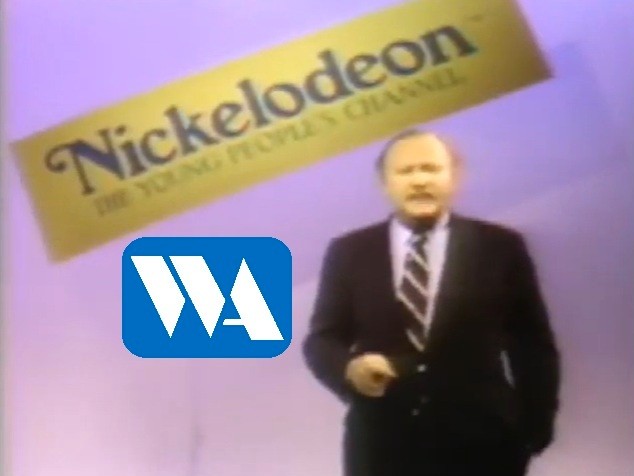
Building on the successful QUBE model, Warner Amex pressed forward with its national expansion strategy. Scott Kurnit, who had served as program director for QUBE in Columbus, Ohio, relocated to New York to oversee the rollout of new cable franchises and systems across the United States. This initiative targeted several major metropolitan regions, including Cincinnati, Pittsburgh, Dallas, New York, Houston, Milwaukee, St. Louis, and Chicago.
By 1980, Warner Amex had become the cable service provider for a remarkable 1.1 million out of the 1.6 million homes in newly franchised markets. This rapid and extensive growth, coupled with the advanced capabilities of the QUBE programming system, established Warner Amex as one of the most prominent companies in the cable industry. “Warner was one of the key leaders, if not the leader, in the franchise wars,” said Kurnit.
With more channels either being launched or preparing to launch nationally, more QUBE personnel made the move from Columbus to New York. Both Nickelodeon and The Movie Channel successfully launched via satellite in 1979, and the latest channel preparing to launch in 1981 was MTV. To better oversee the implementation of local QUBE franchises and nationally launched satellite channels, Warner Amex created a subsidiary company called Warner Amex Satellite Entertainment Company (WASEC). While everything functioned under the Warner Amex banner, including consolidation of all financial activity, the newly formed WASEC would manage and be home to MTV, The Movie Channel, and Nickelodeon.
During this period, Nickelodeon functioned primarily as a strategic tool for its parent company, Warner Amex. The channel was positioned as a unique offering for children’s programming, intended to attract cable operators and persuade them to include Warner Amex’s content in additional markets. By providing Nickelodeon as part of its lineup, Warner Amex aimed to appeal not only to cable operators but also to local authorities. This approach was designed to facilitate the establishment of new cable franchises in various regions, ultimately enabling Warner Amex to increase its subscriber base and expand its footprint.
Importantly, the emphasis for Warner Amex was less on the specific number or quality of programs featured on Nickelodeon and more on the ability to claim a fourteen-hour block of children’s programming — an offering unmatched by other cable companies at the time. The mere availability of this content allowed Warner Amex to market Nickelodeon as a major draw, even if the channel’s program selection was limited or repetitive.
Meanwhile, within Nickelodeon itself, executives faced significant challenges in assembling enough programming to fill out the daily schedule. There was a clear sense of urgency to secure additional shows and diversify the channel’s library, as executives recognized the need to build a more varied and appealing slate of content for young viewers. This scramble for programming highlighted the network’s early struggles and the gap between its promise as a children’s destination and the reality of its available resources.
Tasked with the challenge to lead Nickelodeon in its infancy was Cy Schneider. Born in 1929 in Chicago, Illinois, Schneider’s family moved to Los Angeles when he was still relatively young. It was here where Schneider would attend college at the University of Southern California and earn a bachelor’s degree in journalism. Instead of entering the workforce right away, Schneider would move to New York City to attend New York University and earn a master’s degree in contemporary English literature.
After graduating, Schneider had plans to become a college professor when he returned to Los Angeles. One such opportunity was a possible opening at San Jose State University, where Schneider was hoping for such a position to become available. In the meantime, he was making decent money writing liner notes for record sleeves and got a job at the Carson/Roberts Agency in 1953, a young advertising company based in Los Angeles. Carson/Roberts would become the largest advertising agency in the city after a high-profile campaign to bring the Brooklyn Dodgers to Los Angeles after the 1957 season.
A few of the agency’s biggest clients included Gallo wines, Max Factor, and Baskin-Robbins, but it was the toy company Mattel, a small company at the time, that would impact the trajectory of Cy Schneider’s career the most. In 1954, Schneider was given the reins to the Mattel account by Carson/Roberts founder Ralph Carson, who was the overall manager of the account. When ABC announced in 1955 a Monday through Friday children’s variety show that would feature cartoons from The Walt Disney Company called The Mickey Mouse Club, a Mattel sales representative contacted Carson/Roberts about advertising on the show.
The asking price and commitment were unheard of in the toy industry, a yearlong sponsorship at a whopping $500,000. Schneider pointed out that at this time the entire toy industry would spend roughly $1 million on advertising altogether. Mattel had an advertising budget of only $150,000 but knew the number of kids The Walt Disney Company could reach and the potential earning power the sponsorship could have. After much discussion, and at the risk of bankrupting the company if it didn’t work out, Mattel took a leap of faith and gave Schneider the go ahead to get a deal made.
Schneider and Carson/Roberts were contracted to shoot two commercials for Mattel to air during the debut season of The Mickey Mouse Club. One commercial was for Mattel’s most popular toys, Jack in the Boxes and Getars, wooden music boxes in the shape of guitars. The other was for The Burp Gun, a toy cap gun modeled after machine guns used in World War II (Ralph Carson’s son, Cary Carson, was featured in the commercial hunting elephants). According to Schneider, the commercial for The Burp Gun was the first toy commercial ever put on film. The Mickey Mouse Club was a giant hit, and in turn so was The Burp Gun. By Christmas 1955, Mattel had shipped over a million Burp Guns at a cost of $4 each. The $500,000 gamble had paid off.
In response to the staggering success of their musical and gun toys, Mattel began brainstorming ideas for a girl toy line. Inspiration came from an unlikely place: a German doll named Lili whose purpose was more of a sexual curiosity than a toy doll for little girls. Mattel co-owner Ruth Handler saw the potential in Lili’s three-dimensional, standing figure and imagined her daughter having an actual miniature mannequin body to dress up in different outfits instead of the flat paper dolls she was used to playing with.
Mattel bought the rights to Lili and tested the toy with mothers and daughters. While mothers didn’t care for it, the kids loved it and Mattel decided to go ahead and produce their new product for the marketplace in 1958. In addition to the high test scores from kids, Mattel’s experience with the power of television advertising was enough to convince them that the doll would catch on. Also, the name Lili was changed, and the doll would be named after Mattel owners Ruth and Elliot Handler’s daughter, Barbara, or Barbie for short. (The later introduction of Ken was named after their son).
Cy Schneider saw the advertising for Barbie as a way to give young girls something to aspire to. Barbie was treated not merely as a toy but as an actual person that girls could look up to. This was reflected in the advertising when commercials were essentially 60 second clips of Barbie’s life where “the events of the story provided reasons for her to change into her many costumes,” as Schneider explained.
These early Barbie commercials could be seen as Schneider’s first foray into children’s programming, giving kids inspiration through storytelling. He may have been an ad man, but by the late 1950’s Schneider was already foreshadowing his future in children’s television. The pathway certainly makes sense. Children’s television programs and the toy advertisements that sponsored them could be considered two sides of the same coin.
This storytelling through advertising would arise again in 1968 when Mattel would release Hot Wheels. Inspired by Matchbox, a line of classic diecast car models owned by British company Lesney, Hot Wheels was Mattel’s way of updating the traditional Matchbox cars, giving their product a racy, fast look with hot rod styling. Like Barbie, Hot Wheels was an instant smash success, and like Barbie’s advertising, The Hot Wheels commercials told a story meant to excite young boys.
Schneider explains the advertising as demonstrating the speed of the cars as they whipped around their plastic track playsets. With the camera placed at eye level next to the track, any Hot Wheels speeding around a curve or making a jump looked “very dramatic.” Using the camera in this way was a form of visual storytelling, showing exactly what these fast little cars could do. Like Barbie, the advertising for Hot Wheels didn’t treat the cars merely as toys, but rather having the capability of generating the same excitement as an actual race car. Once again, this approach worked.
In fact, it worked so well and Hot Wheels was so popular that Eddie Smardan, a fellow ad man at Carson/Roberts, thought Hot Wheels had potential to be a half hour cartoon series. Smardan teamed up with producer Ken Snyder, who wrote and produced the 1960’s cartoons Roger Ramjet and The Funny Company, and released The Hot Wheels in 1969 featuring young vocal talents from future Oscar nominated filmmaker Albert Brooks and radio legend Casey Kasem.
Although The Hot Wheels was a Saturday morning hit at first, many parents saw the cartoon as nothing more than a half hour commercial. After an investigation by the Federal Communications Commission (FCC), the ABC network was let off with a warning, and the show was allowed to remain on the air. However, The Hot Wheels would only last for one season, so how much of the FCC’s warning was indeed just a warning is up for debate.
It was also during The Hot Wheels campaign when Schneider was named president of Carson/Roberts. The advertising genius of Schneider and his fellow colleagues at Carson/Roberts were on full display at this time. It helped that their client, Mattel, was an innovative trailblazer within the toy industry, but the advertising campaigns created by Carson/Roberts were instrumental in bringing Mattel’s products to the attention of kids across the country. The idea that an existing toy line like Hot Wheels could lead to its own cartoon was unheard of in 1969. Schneider had an eye for children’s advertising, but he also had an eye for children’s programming.
With Mattel growing into a global brand by 1970, Carson/Roberts was acquired by a large international advertising agency called Ogilvy & Mather, one of the most successful agencies in the world. Founded in 1850 in London and known as “The Gentleman’s Ad Agency”, Ogilvy’s most famous campaign was the highly effective slogan, “An apple a day keeps the doctor away,” a slogan known still to this day. Ogilvy came over to the United States the same year The Beatles led the British invasion, merging in 1964 with a New York City based agency. Ogilvy & Mather’s acquisition of Carson/Roberts would bring Schneider back to New York, where he would work for the company for the next 10 years, including as senior vice president from 1978-1980.
Ogilvy & Mather took advantage of Schneider’s knowledge and experience in children’s advertising, asking him to create an internal presentation on the subject. These presentations covered a wide variety of subjects and were to strengthen the collective knowledge of the agency to impress potential clients. Schneider’s contribution was “How to Advertise to Children,” a presentation that was instrumental in securing campaigns for Hershey, Kool-Aid, and Ralston cereals when they introduced Cookie Crisp.
During this time Schneider worked as senior international executive on several large accounts in dozens of countries around the world. It was in early 1980 while in New York, that Schneider took a meeting that would change the trajectory of his career.
The chairman of Ogilvy & Mather asked Schneider if he would make a call to one of their new clients, a newly formed venture looking to expand in the cable business. He was told to reach out to former CBS president Jack Schneider (no relation) and John Lack, the chief executive and executive vice president respectively, of WASEC, and offer whatever advice he could regarding the company’s new network for kids, called Nickelodeon. After the meeting Schneider said he was “captivated” by Jack Schneider’s style and impressed by John Lack’s vision for what Nickelodeon could be.
Jack Schneider and John Lack were well aware of Cy Schneider’s experience with both advertising to children and knowing which children’s programming was worth spending advertising dollars on. He was also a successful and buttoned up businessman with a dollars-and-cents approach that he learned in his decades in advertising and managing dozens of international accounts for large companies. Described by Schneider as a “whirlwind courtship,” within six months Cy Schneider found himself as the vice president of Nickelodeon. He saw the network as “a bright and shining new light in children’s television,” but also understood the business behind the channel filling a void in the cable marketplace. Offering quality programming to children was a high priority, but stabilizing a new network and creating a profitable business was priority number one.
To achieve this, Schneider deliberately set out to offer children something different from the standard fare available on television at the time. He was keenly aware of the saturation of cartoons in children’s programming and realized that, in order to convince cable operators to carry Nickelodeon, the network needed to present unique content instead of simply duplicating the cartoon-based offerings that broadcast networks already provided for free. This conviction drove Schneider’s strategy as Nickelodeon took shape and, guided by a philosophy rooted in deep respect for children as viewers, he made programming decisions that prioritized quality and education over imitation.
Schneider recognized the constraints of traditional broadcast networks, stating, “The networks are in a strange bind. They’re subject to ratings and need advertising to exist.” These obligations led the networks to avoid experimentation and instead rely heavily on cartoons, which Schneider noted originated from “three or four sources.” From a business standpoint it’s understandable that the networks relied on and produced numerous cartoons for their children’s programming. Cartoons are what generated the ratings that the networks needed, and because of that they became the status quo for kid audiences.
“The networks’ Saturday morning lineup is substantially the same [today] as 20 years ago,” Schneider explained. With his background in business and advertising, Schneider realized that meaningful change in children’s programming would have to come from cable television, where there was greater room for innovation and a commitment to offering something new for young audiences.
With this mindset, Schneider saw Nickelodeon as a worthwhile challenge and opportunity to change the status quo of children’s programming, and Warner Amex gave him the freedom to do so. This freedom to do things his own way is what ultimately encouraged Schneider to leave his “comfortable” 27-year advertising career. The only restriction put on Schneider was the company’s insistence that he does not go over budget. And that budget was small.
One of Schneider’s first actions at Nickelodeon was to commission a new logo. The first logo change came in 1980 and dropped the man in the bowler hat created by Joseph Iozzi, simply leaving the word “Nickelodeon.” The lettering was presented in a typeface that was tall and somewhat formal, yet softened by playful curves reminiscent of the lettering used for Pinwheel. Removing the outdated bowler hat man was a good idea, and while the new logo was an improvement, it still lacked the kind of visual impact that would capture attention and spark curiosity.
However, Schneider was more focused on establishing visual and audible identifiers for the network. He believed that children formed stronger memories and connections with distinctive visuals and memorable auditory cues rather than a simple logo. In Schneider’s view, flashy and elaborate network promotions were largely ineffective — “stuff kids didn’t care about anyway.”
With this philosophy in mind and mindful of the network’s limited budget, Schneider sought to create bumpers that were both memorable and cost-effective. Instead of relying on high-energy graphics or expensive productions, Nickelodeon hired a mime to perform brief visual acts in front of a plain black background. This minimalist style ensured that the bumpers were not distracting but remained easily recognizable and simple for children to remember. The approach aligned with Schneider’s two goals: to create a memorable visual identity for Nickelodeon while adhering to the financial constraints facing the fledgling network.
Dozens of bumpers featuring the mime (wearing a bolo hat, just like the first Nickelodeon logo) were filmed and aired before each program. Each segment was different, showing the mime doing various things while a version of the music from “(Put Another Nickel In) Music! Music! Music!,” the hit 1950 song from Teresa Brewer, plays over the images. One was a close up of the mime’s eyes, wide open and cross-eyed, then looking left, then right, back to cross-eyed, and finally up as the Nickelodeon logo fades in just above the brim of his hat.
Another shows him taking off his hat and placing it on a broom that he then begins to dance with as Nickelodeon again fades in on the screen. Another shows the mime with a magazine in front of his face, the magazine has the Nickelodeon logo on the cover along with pictures from the programs at the time. The mime lowers the magazine, winks, and then raises the magazine back in front of his face. There’s another that just shows his hat getting lifted by a white gloved hand that simply finger waves at the screen. The content was quick and memorable, aligning with Schneider’s objectives. However, these promotional spots lacked originality and failed to evoke inspiration.
Stay tuned for chapter 6, coming next week!


Leave a Reply